Digital Nomad Morocco: Can I Work Remotely as a Canadian in Morocco?
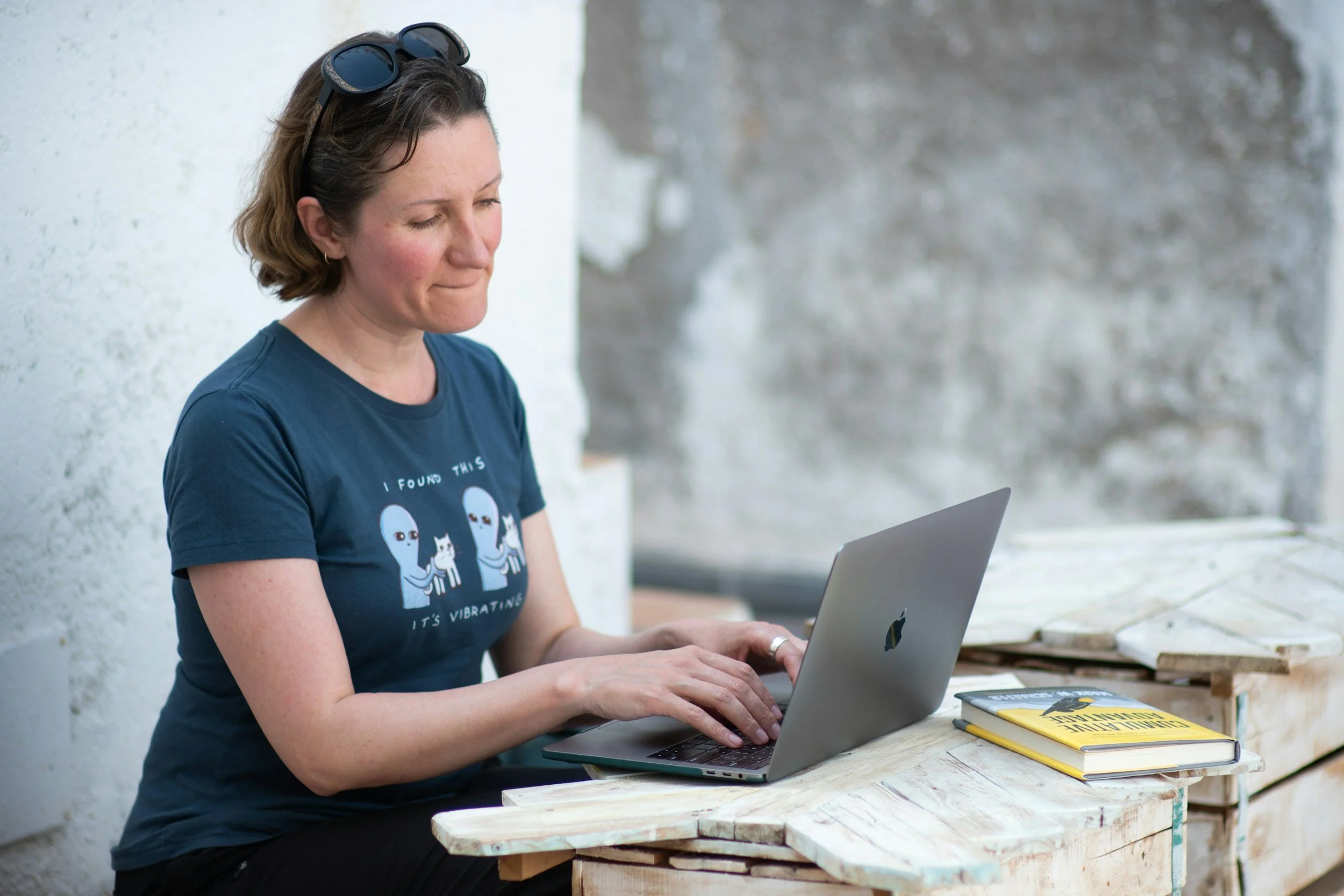
There is a moment that happens to a lot of people after they come home from Morocco.
They start wondering what it would be like to stay longer.
Not forever, necessarily. Not pack-up-your-life-and-move tomorrow. But longer than a rushed week. Long enough to have a favourite café. Long enough to know which streets are quiet in the morning. Long enough to work for a few hours, close your laptop, and step out into a medina that feels nothing like home.
I understand the appeal completely.
Morocco has that effect on people. It is close enough to Europe to feel accessible, but culturally and visually, it is something entirely its own. There are ancient cities, Atlantic beaches, mountain villages, desert camps, rooftop terraces, markets, food that makes you slow down, and a pace of life that can feel deeply refreshing when you are used to always being on.
So the question comes up often: can I work remotely from Morocco as a Canadian?
The honest answer is yes, for some people and for the right kind of stay, it may be possible. But it is not something I would approach casually. You need to understand the difference between visiting Morocco while working online and actually moving there. You need to think about visas, taxes, your employer’s rules, insurance, internet, time zones, and the kind of itinerary that allows you to both work and actually enjoy the country.
Because remote work in Morocco can be wonderful. But only if the trip is built properly.
Can Canadians stay in Morocco without a visa?
For most Canadian travellers, Morocco is relatively simple to enter for a short stay. Canadian citizens can generally visit Morocco for up to 90 days without a tourist visa.
That is one of the reasons Morocco can be so appealing for a longer trip. You are not trying to squeeze everything into ten days. You can slow down. You can spend a week in Marrakech, another by the coast, a few days in the mountains, and still have time to work in between.
But this is where people need to be careful.
Visa-free entry does not mean you can move to Morocco permanently. It also does not mean you can enter the local job market, take a position with a Moroccan company, or treat the country as your new long-term base without looking into the proper permissions.
There is a difference between answering emails for your Canadian employer while you are visiting Morocco and working locally in Morocco. That distinction matters.
If you are planning a short remote-work stay, your situation may be fairly straightforward. If you want to stay longer than 90 days, build a life there, rent long-term, take Moroccan clients, or make Morocco your main base, that is the point where you should get proper immigration advice before you make plans.
Does Morocco have a digital nomad visa?
At the moment, Morocco does not have a dedicated digital nomad visa in the way some countries do.
A digital nomad visa usually gives remote workers a clear legal pathway to live temporarily in a country while earning income from somewhere else. Morocco does not currently offer that kind of specific program.
That does not mean remote work from Morocco is impossible. It simply means Canadians need to be thoughtful about how long they stay, what kind of work they are doing, who they are working for, and whether their plans still fit within regular visitor rules.
For many people, the simplest option is a short stay. A few weeks, or even a longer visit within the allowed period, can work beautifully if the rest of the details are in place.
Anything beyond that deserves more careful planning.
A short stay is not the same as moving to Morocco
This is probably the most important distinction.
Spending a few weeks in Morocco while working online is one thing. Moving to Morocco is another.
A remote-work trip might look like basing yourself in Marrakech, Rabat, Casablanca, Essaouira, or Tangier for part of the month while continuing to work with Canadian clients or a Canadian employer. You keep your life in Canada, your income comes from Canada, and Morocco becomes the place you are temporarily working from.
A move is different.
If you are renting for several months, building a local network, taking local clients, hiring help, or making Morocco your primary home, the rules and responsibilities become more complicated.
This is where planning matters. And I do not just mean legal planning. I mean practical planning, too.
A good remote-work itinerary should not feel like a regular vacation itinerary. You cannot change cities every two days, take calls at midnight, squeeze in a desert drive, and expect to feel rested. Morocco rewards slow travel anyway, but if you are working, it becomes essential.
You need time to arrive. Time to settle. Time to work. Time to explore. Time to move between cities without feeling like your laptop is chasing you across the country.
What should a remote-work itinerary in Morocco look like?
It should move slower than you think.
That is the first thing I would say.
If you are on vacation, you might be able to tolerate a busy route. Marrakech for two nights, Fes for two nights, the desert, the coast, the mountains. It can be done. But if you are working at the same time, that pace becomes exhausting very quickly.
You need reliable Wi-Fi. You need quiet. You need a comfortable place to sit. You need mornings or evenings that are not constantly swallowed by packing, checking out, driving, and finding your next riad.
A better plan is usually to choose one or two main bases and then build around them.
Marrakech works well if you want energy, restaurants, shopping, rooftops, and easy access to day trips. It is stimulating and beautiful, but it is not always quiet. For some people, that energy is exactly the point. For others, it can be a lot.
Essaouira is a completely different rhythm. The Atlantic air changes everything. It is slower, softer, easier to wander. If I were choosing a place to write, work, walk, and eat grilled fish by the water, Essaouira would be high on my list.
Rabat is calmer and more organized than many people expect. It is a good option for someone who wants city life without quite as much intensity.
Casablanca is more business-focused and less romantic as a travel base, but for some remote workers, that is exactly why it works. It feels more practical.
Tangier gives you the north, the sea, the hills, and a sense of Morocco that feels different from the south. It can be a lovely base if you want coastal views and access to northern Morocco.
The right answer depends on your work. Not just your travel wish list. Your actual work.
If you need to be on video calls every day, that changes the trip. If you can work asynchronously and explore in the mornings, that changes it again. If you need silence, do not choose the liveliest part of the medina just because it looks charming online.
That is the kind of detail that makes or breaks this kind of trip.
What if I work for a Canadian employer?
If you work for a Canadian employer, do not assume that “remote” means “remote from anywhere.”
This surprises people, but it matters.
Your employer may have rules about working outside Canada. Those rules might involve privacy, cybersecurity, payroll, taxes, insurance, employment law, time zones, or the type of information you handle.
Some employers are flexible. Some are not. Some will allow international remote work for a short period, but only with written approval.
Ask before you go.
That is especially important if you work with sensitive client information, healthcare records, legal documents, financial records, government-related work, or anything confidential. A café in Marrakech might be a beautiful place to answer emails. It might not be an appropriate place to open private client files.
I am not saying this to make the idea feel impossible. I am saying it because the smoothest trips are the ones where the boring questions are answered before you leave.
What if I am self-employed?
If you are self-employed, freelance, or run your own online business, you may have more flexibility.
You may also have more responsibility.
If your clients are in Canada or outside Morocco, and you are only staying for a short period, things may be fairly simple. But you still need to think about taxes, insurance, client expectations, business registration, contracts, and how long you will be away from Canada.
If you begin taking Moroccan clients, advertising locally, hiring local help, or staying long term, that is a different situation.
This is where I would speak with a tax professional before you go. Not after. Not when something has already become complicated. Before.
Remote work gives people a lot of freedom, but it does not remove the practical responsibilities that come with earning income.
Will I still pay taxes in Canada?
Working from Morocco does not automatically mean you stop paying taxes in Canada.
For most Canadians on a short stay, taxes will likely continue much as they normally do. Canada generally taxes residents on worldwide income, so if you remain a Canadian tax resident, you will usually still report your income in Canada even if you earned it while physically sitting in Morocco.
For a longer stay, tax residency can become more complicated.
It may depend on where your home is, where your family lives, where your bank accounts are, how long you are away, whether you keep provincial health coverage, and whether you establish meaningful ties somewhere else.
This is not something I would try to figure out from a travel forum.
If your plan is more than a short visit, get tax advice.
What does it cost to live in Morocco for a month?
This is one of those questions where the honest answer is: it depends.
Morocco can be very affordable compared to many places in Canada, but costs vary a lot depending on the city, neighbourhood, season, and the way you like to travel.
Marrakech, Casablanca, Rabat, Tangier, and popular tourist areas usually cost more than smaller cities or quieter residential neighbourhoods. A comfortable apartment with strong internet, air conditioning, a good location, and a proper workspace will cost more than a basic room.
And for remote work, comfort matters more than people sometimes expect.
You might be able to travel cheaply if you are on vacation. You can tolerate a small room, a weak shower, noisy streets, or Wi-Fi that works most of the time. But when you are working full days, those things become much more important.
As a general planning estimate, one Moroccan dirham is roughly fifteen cents Canadian, so 1,000 MAD is about $150 CAD. Exchange rates change, so I would treat that as a rough guide, not a fixed number.
For one person living comfortably but not extravagantly, a realistic monthly budget may land somewhere around 10,000 to 20,000 MAD, or roughly $1,500 to $3,000 CAD.
Could you spend less? Yes. If you choose a modest apartment, cook most of your meals, use local transportation, and stay outside the most expensive areas.
Could you spend more? Also yes. If you want a stylish apartment, private drivers, restaurants, weekend trips, premium coworking spaces, tours, and higher-end neighbourhoods, the number climbs quickly.
The thing I would not cheap out on is the place you are actually going to work.
Reliable Wi-Fi, a quiet room, air conditioning or heating when you need it, laundry, and a decent location can make the difference between “I loved working from Morocco” and “I was stressed the whole time.”
Internet, time zones, and the reality of working
Morocco can work well for remote work, but you need to choose your accommodation carefully.
Do not rely only on a listing that says “Wi-Fi included.” That can mean almost anything. Ask about speed. Ask about reliability. Ask whether the connection is strong enough for video calls. If you have important meetings, uploads, client calls, or deadlines, internet quality is not a small detail.
Time zones matter too.
Morocco is several hours ahead of Canada, depending on where you live and the time of year. That can be wonderful if your schedule is flexible. You can have your mornings free, wander the medina, take a long lunch, or walk by the water before opening your laptop later in the day.
But if you need to match Alberta or Ontario business hours, your workday may stretch into the evening.
That is not necessarily a problem. It just needs to be planned honestly.
Before building your itinerary, look at your real work schedule. Not the ideal version. The real one. The meetings you cannot move. The calls you have to take. The days you need deep focus. The deadlines that will not care that you are in Fes.
Then build the trip around that.
Travel insurance and health coverage
Before travelling, make sure you have proper travel medical insurance.
Canadian provincial health coverage may offer limited support outside Canada, but it will not cover everything. You should also check how long you can be outside your province before your provincial coverage is affected.
If you plan to work while travelling, read the policy carefully. Some insurance is designed for regular vacation travel. Some policies may be better suited to longer stays. Some may have exclusions you do not notice until you need help.
This is not the exciting part of planning. I know.
But it is the part that lets you relax once you are there.
How Maple & Medina can help
Remote work in Morocco is not just about finding a cheap apartment and hoping the Wi-Fi holds.
It is about building a trip that actually works.
You need the right base, the right pace, the right travel days, and enough space in the itinerary to enjoy the country without feeling like you are failing at either work or travel.
This is where local knowledge changes everything.
Maple & Medina helps travellers build custom Morocco itineraries around the way they actually want to travel. For remote workers, that might mean choosing a quieter riad or apartment, planning a slower route, arranging smoother transportation, avoiding rushed travel days, and making sure your time in Morocco feels full without becoming chaotic.
Maybe you want medinas and markets. Maybe you want the coast. Maybe you want mountains, food, architecture, shopping, or a few days in the desert. Maybe you want to work most afternoons and explore in the mornings. Maybe you need three solid workdays in one place before you move again.
That is the point of a custom itinerary.
It should reflect your real life, not just your travel wish list.
So, can you work remotely as a Canadian in Morocco?
Yes, for the right kind of short stay, it may be possible.
It is most realistic if your income comes from Canada or another country outside Morocco, you are not working for a Moroccan employer, and you stay within the allowed visitor period.
But it is important to plan carefully.
Check the current entry rules. Speak with your employer if you have one. Get tax advice if you are staying longer. Arrange travel insurance. Choose accommodation with reliable Wi-Fi. Build an itinerary that gives you enough time to work, rest, and actually experience the country.
Because Morocco is not just a backdrop for your laptop.
It is a place worth paying attention to.
The mornings in the medina. The call to prayer across the rooftops. The Atlantic wind in Essaouira. The long drives through changing landscapes. The mint tea that arrives when you thought you were only asking a quick question. The ordinary daily beauty that you miss when you are rushing.
With the right planning, remote work in Morocco can give you something rare: a way to stay connected to your work while stepping into a completely different rhythm of life.
And with Maple & Medina, your trip can be built around both parts of that equation — enough structure to feel organized, and enough freedom to enjoy where you are.