
Best Places to Visit in Morocco: A First-Time Visitors Guide
The first time I walked through the medina in Fes, I got completely lost. Not the "mildly turned around" kind of lost. The kind where you genuinely are not sure which century you have wandered into. Narrow lanes, the smell of bread baking somewhere nearby, the sound of a craftsman hammering copper just around a corner. I stopped and thought: this is fascinating.
That was the beginning of Maple & Medina.
I have been asked, many times, where to go in Morocco on a first visit. It is a fair question. Morocco is not a small country, and it is not a simple one. There is a lot of it: mountains, desert, ancient cities, Atlantic coastline, Saharan dunes. The instinct is to try to see all of it at once. I understand that instinct. I had it myself.
But if you are coming from Canada, flying across nine time zones, and have one week, the answer is not "all of it." The answer is three places. And I will tell you exactly which three.
Check out our Grand Moroccan Journey Itinerary for additional planning info.
A taste of Morocco
If I had one week and was coming to Morocco for the first time, I would spend it in Marrakech, Fes, and the Sahara Desert. Not because these are the only places worth visiting in Morocco (they are not). But because together, they tell you what Morocco actually is.
Marrakech gives you the energy. Fes gives you the depth. The desert gives you the silence. You need all three.
Marrakech
One of the Best Places to Visit in Morocco
Most people fly into Marrakech, and I think that is exactly right it’s on the list of best places to visit in Morocco. It is a good place to land, overwhelming at first, but in a way that pulls you in rather than pushes you away.
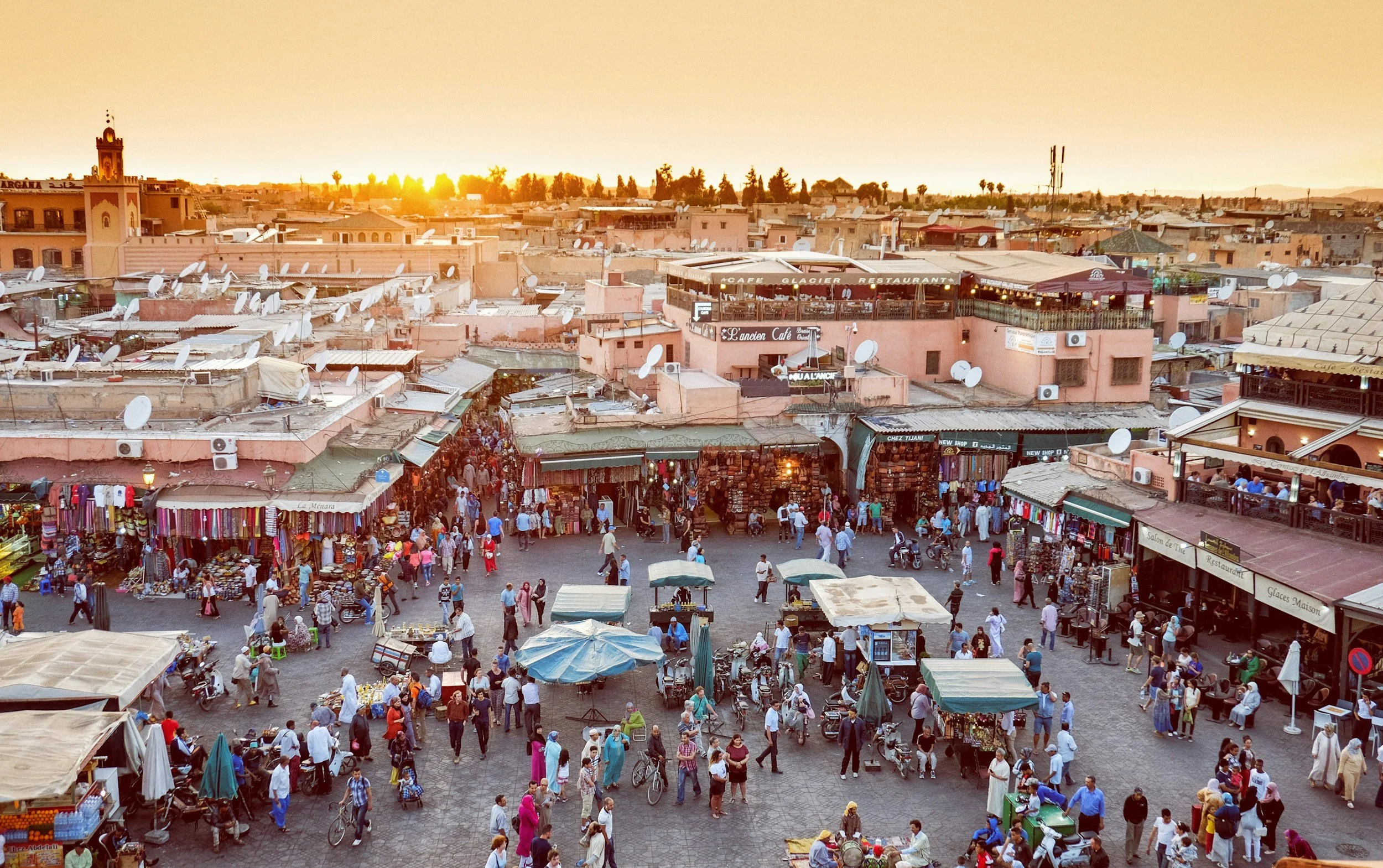
The medina is the obvious starting point. Djemaa el-Fna is the square everyone talks about, and it earns the attention. In the morning it is relatively quiet, just orange juice vendors and locals moving through their day. By evening, it transforms completely: food stalls, musicians, the call to prayer drifting across everything. I recommend sitting on one of the many rooftops above the square and taking it all in.
Beyond the square
Bahia Palace and the Saadian Tombs for the architecture, the Ben Youssef Madrasa for the tilework and carved plaster, and the souks, which reward slow wandering more than anything else. Our guide has a way of navigating the souks that makes the whole thing feel like a private tour rather than a survival exercise. That matters more than you might expect.
If you have an extra day, the Majorelle Garden is genuinely beautiful, particularly early in the morning before it gets busy. And if someone offers you a cooking class in a riad kitchen, say yes immediately.
How long in Marrakech: Two nights minimum. Three is better.
Fes
People sometimes ask me whether they should spend their Morocco trip in Marrakech or Fes. My answer is always: both. They are not the same city in different locations. They are completely different experiences.
Marrakech is Morocco's showroom. Fes is its library.
Fes el-Bali, the old medina, is the largest car-free urban area in the world. It has been continuously inhabited for over a thousand years. The Al-Qarawiyyin University, founded in 859, is the oldest operating university on the planet. Walking through Fes, you are not visiting history; you are standing inside it.
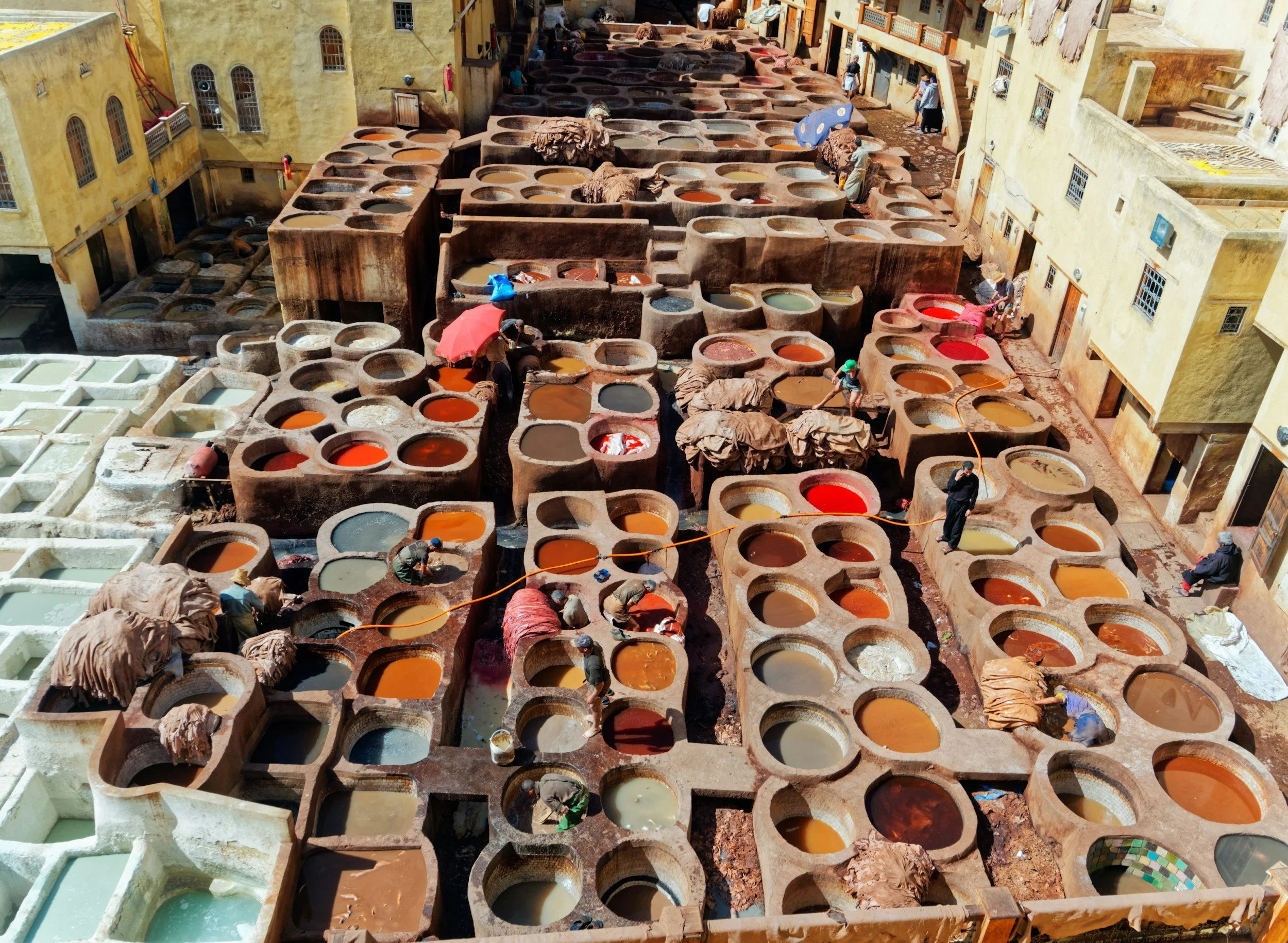
The Chouara tanneries are what most visitors come to see, and they should. There is nothing quite like standing on a terrace above those ancient dyeing pits, watching leather craftsmen work in pools of colour below. The smell will hit you before the view does. The tannery workers give out sprigs of mint for this reason.
But the tanneries are one hour in a day that rewards being slow. Hire a private guide. Let them lead you into the craft quarters where the zellige tiles are cut, where the babouche slippers are made, where the copper pots are hammered into shape. These are not demonstrations set up for tourists. These are people's working days, and being allowed into them briefly is something I find genuinely humbling every time.
How long in Fes: Two nights. One full guided day in the medina, one morning to wander at your own pace.
The Sahara Desert
I saved this one for last because it is the one that is hardest to describe.
The dunes of Erg Chebbi near Merzouga are not what I expected the first time I saw them. I had seen photographs. The photographs do not prepare you for the scale, or for the quality of the silence, or for what happens to the light at sunset when it hits the sand from a low angle and everything turns gold and amber and rust.
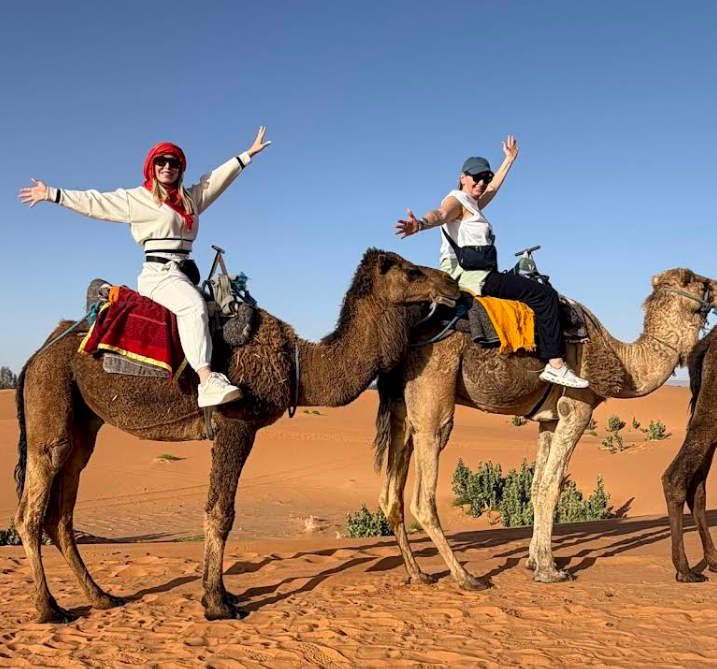
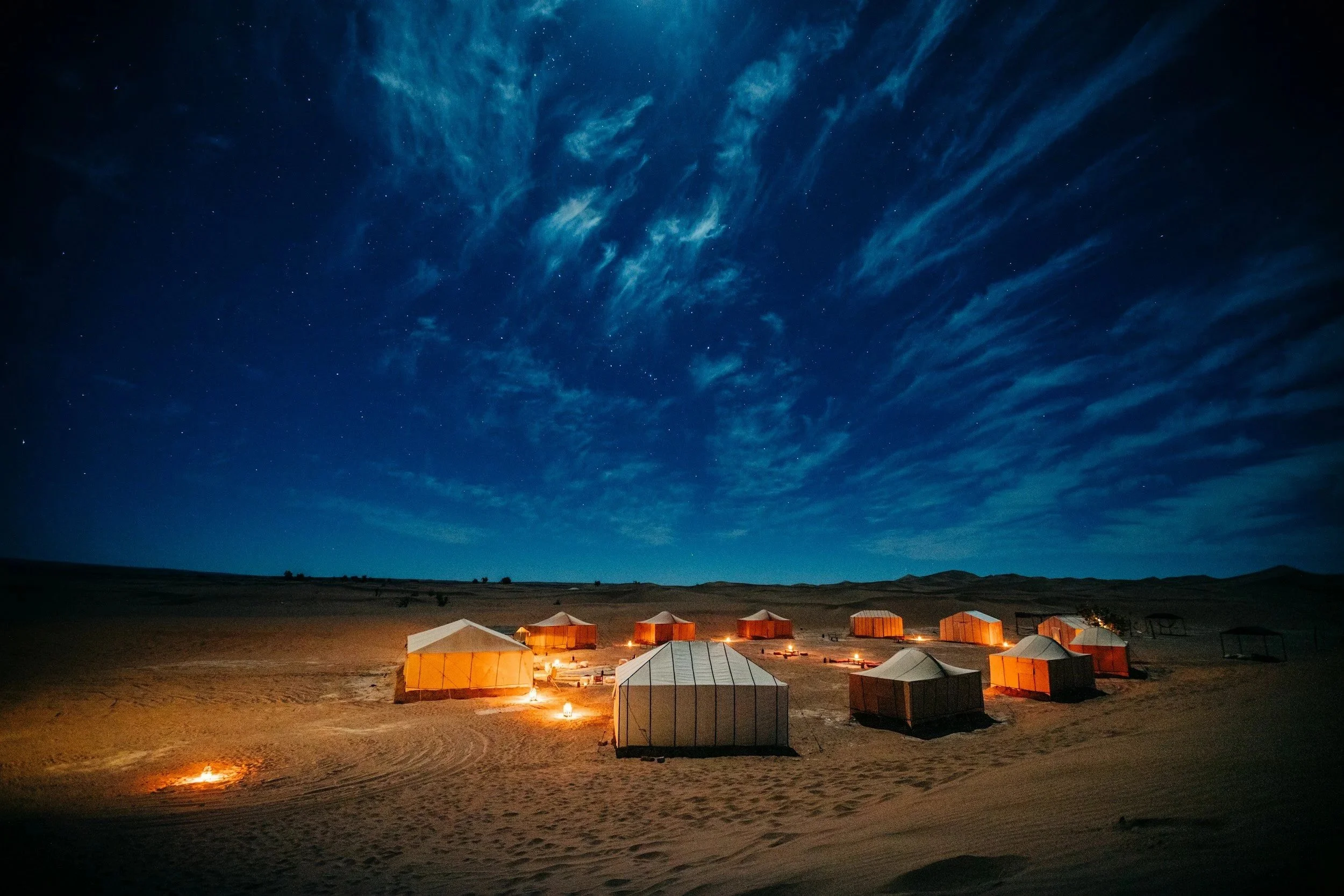
We take our guests in by camel at dusk and bring them to camp just as the sun goes down. Alternatively, if you don’t fancy a camel trek, we can arrange for 4×4 to take you into camp. After dinner, gather around the fire, there is music, and then it gets very quiet and very dark in a way that most of us never experience. The stars appear in a way that is almost difficult to believe.
In the morning, I wake people before sunrise and take them to the top of the nearest dune. That is the moment I watch for, every trip. The moment someone stands at the top of a dune in the Sahara at first light and just goes quiet.
That is why we do this.
How long in the desert: One night at minimum. Two if you can. The second day brings visits to the Gnawa musicians of Khamlia and time to simply be in the dunes without an agenda. For the more adventurous, we arrange quadding or sandboarding in the dunes. It’s more than a day trip, it’s an experience, it’s absolutely stunning and and one of the important places to visit.
A suggested one-week itinerary from Canada
This is the foundation of our Imperial Cities & the Sahara journey, a seven-day route that connects all three regions in a logical, unhurried loop starting and ending in Marrakech.
Days 1–2: Marrakech Arrive and settle in. Day one at your own pace. Day two: Bahia Palace, the souks, the medina, Djemaa el-Fna in the evening.
Day 1 (on the road): Marrakech → Dadès Valley Depart around 08:00. Cross the High Atlas via Tizi n'Tichka with stops for photos of valleys and Berber villages. Explore the UNESCO ksar of Aït Benhaddou, with lunch overlooking the kasbah if possible. Optional stop in Ouarzazate at Atlas Film Studios or Taourirt Kasbah. Drive through Skoura Oasis and the Valley of Roses. Overnight in the Dadès Gorges.
Day 2 (on the road): Dadès → Todra Gorge → Merzouga A short walk into the Dadès Gorge to see the monkey fingers rock formations. Drive to Todra Gorge for an hour on foot among the sheer red cliffs. Early lunch, then south through Tinjdad, Erfoud, and Rissani as the landscape shifts toward desert. Arrive in Merzouga by mid-afternoon. Camel trek or 4×4 into Erg Chebbi at sunset. Dinner under the stars, Berber music, overnight in a desert camp.
Day 3 (on the road): Merzouga → Fes Optional sunrise over the dunes. Breakfast at camp, then drive north through the Ziz Valley, Midelt (lunch stop), the Azrou cedar forest, and Ifrane. Arrive in Fes early evening and check in to a riad in Fes el-Bali.
Day 4: Fes A full day in the medina with a private guide. Al-Qarawiyyin University, Bou Inania Madrasa, the Chouara Tanneries viewed from the terraces above, the Nejjarine Fountain, and the craft quarters. Rooftop dinner with views over the medina.
Day 5: Fes → Rabat → Casablanca Drive to Rabat (approx. 2.5–3 hours) for a short visit to the Kasbah of the Udayas, Hassan Tower, and Mausoleum of Mohammed V. Continue to Casablanca (approx. 1.5–2 hours). Visit Hassan II Mosque and the Corniche. Overnight in Casablanca. A direct Fes to Casablanca route is also available if you prefer to skip Rabat.
Day 6: Casablanca → Marrakech Morning visit to Hassan II Mosque if not seen the day before. Drive to Marrakech (approx. 2.5–3 hours). Evening at Jemaa el-Fna.
Day 7: Marrakech / Departure Bahia Palace, El Badi Palace, Koutoubia Mosque, Saadian Tombs. Optional: Majorelle Garden and Ben Youssef Madrasa. Last pass through the souks and a rooftop dinner before transfer to the airport.
If one week feels too short (it will), the same route in fourteen days gives you time to breathe, to linger, and to add the north: Chefchaouen, Tangier, and the Mediterranean coast. That is our Grand Moroccan Journey.
A note on planning from Canada
Flying from Canada to Morocco means a long travel day regardless of routing, usually 10 to 14 hours depending on your connection point. Most guests fly via Paris, Madrid, London, or Montreal. Build an extra half day into your arrival in Marrakech to adjust; do not plan to hit the ground running on day one.
I also want to say this plainly, because I get asked all the time: Morocco is safe. I have travelled there as a woman, many times, including alone. Like anywhere, it rewards preparation and good local knowledge. That is exactly what Hajaj and I provide for every person who travels with us.
If this has been useful and you are starting to think seriously about a first trip, I would love to hear from you. No obligation, just a conversation.
Kristin is the Canadian founder of Maple & Medina, a boutique Morocco travel company for Canadian travellers. Every itinerary, riad, and guide is personally vetted by Kristin and her Moroccan co-founder Hajaj. Questions? Write to her directly at kristin@mapleandmedina.ca
-
For a first trip, I would keep it simple: Marrakech, Fes, and the Sahara Desert. There are many beautiful places to visit in Morocco, but trying to see all the cities in one week is how you end up exhausted instead of enchanted. Marrakech gives you the energy, Fes gives you the depth, and the Sahara gives you the silence. Together, they offer a real introduction to Morocco: ancient medinas, good food, city life, craft traditions, sand dunes, and that moment in the desert when everything finally goes quiet.
-
If you have more than one week, yes. Chefchaouen, the famous blue city in northern Morocco, is absolutely worth visiting on a longer itinerary or a second trip. Essaouira is a personal favorite if you want ocean breeze, Essaouira’s medina, the port area, and a slower Atlantic coast rhythm. The Atlas Mountains are also worth adding if you want beautiful views, Berber villages, great hiking, and a different approach to the country beyond the vibrant cities. But for a one-week Morocco trip from Canada, I would not try to add everything. Give yourself a few days to actually experience the places, not just check them off Google Maps.
-
That is exactly what makes Morocco so interesting. Morocco is located in North Africa, but it does not fit into one easy category. You have the imperial city of Fes, the energy of Marrakech, the vast dunes of the Sahara, the Atlas Mountains, the Anti Atlas Mountains, wild beaches on the Atlantic coast, and small town stops that feel completely off the beaten path. If it is your first time, start with Marrakech, Fes, and the desert. Then, on your next trip, add Chefchaouen, Essaouira, Rabat, Aït Ben Haddou, the Dadès Valley, or somewhere quieter on the beaten track between regions. That is the beauty of Morocco: the first visit answers some questions and creates about ten more.
-
If this is your first trip to Morocco, do not feel like you need to see the entire country at once.
You really do not.
Morocco has too many interesting places to squeeze comfortably into one week. I would start with Marrakech, Fes and the Sahara, then save the north and the coast for another trip.
That is when I would add Chefchaouen, the Rif Mountains, Essaouira, Rabat and perhaps a few quiet days along the Atlantic coast.
Rabat, Morocco’s capital, is calmer than many travellers expect. You can visit Hassan Tower, walk through the Kasbah of the Udayas and enjoy the city’s bright, whitewashed streets near the water.
Essaouira is where I would go to slow everything down. Eat fresh seafood by the port, wander through the medina and walk beside the ocean without worrying about what comes next.
You will not see everything in one trip.
But you may enjoy Morocco more when you stop trying to.